
El Paso Directory Holdings
El Paso directory research begins with a collection range, not an assumption that every year survives. The El Paso County Historical Society reports directories from 1886 through 2011, but its public collection description does not provide a complete volume-by-volume publisher list. Border Heritage confirms directories in its noncirculating genealogy reference collection, while UTEP and the Portal to Texas History supply overlapping historical material. Use the catalog or repository staff to confirm the exact year, edition, and shelf or digital object before treating a gap as proof that a person left town.
| Collection | Reported span | Repository | Research access |
|---|---|---|---|
| El Paso directory holdings | 1886-2011 collection range | El Paso County Historical Society | Research Center access by appointment; verify annual gaps. |
| Directory of City of El Paso | 1889 | Portal to Texas History | Digitized 167-page object with names, residences, street guide, officials, societies, and classified listings. |
| Worley’s El Paso directories | 1898, 1900, and 1904-1916 cited; 1912 digitized | UTEP and Portal to Texas History | Alphabetical, classified, street-guide, and local-information sections. |
| Border Heritage directory reference | Annual shelf span not published | El Paso Public Library | In-person or remote staff help; reference collection does not circulate. |
| Street sections | Verified in 1889 and 1912 objects | Digitized volumes and local repositories | A limited address route, not a confirmed dedicated reverse-directory run. |
A publisher’s volume may use information gathered before its cover year. Record its printed year, page number, section, and the access date for the digital image. That small record protects against a common mistake: turning one listing into an exact move date or a statement of ownership.
El Paso Directories at Border Heritage
Border Heritage Library is the public starting point when a directory needs companions. It combines Southwest, Genealogy, and Raza collections, and its research material identifies local newspapers, maps, high-school yearbooks, census material, cemetery records, vital indexes, vertical files, and genealogy publications alongside city directories. The Main Library is at 501 N Oregon, and staff assist researchers in person and remotely. Library hours can change, so check the research page before a visit and give staff a full name, spelling variants, approximate years, street or neighborhood, and the record type sought.
Border Heritage Library’s collection page shows the local-history categories that can extend an El Paso directory search beyond one printed listing.

Newspapers can bridge dates between editions, while yearbooks and vertical files can add a school, organization, or neighborhood lead. None of those sources makes a directory entry into title evidence, but together they make a dated household question easier to test.
For material that is not online, the practical fallback is direct staff help, then a repository visit. A targeted request is more useful than asking staff to locate a person generally: name the collection, period, variant spellings, old address, and whether a scan, page citation, or finding-aid reference is needed.
El Paso Directory Digital Editions
Two digitized editions give the historical shelf a solid public entry point. The 1889 Directory of City of El Paso, supplied by the El Paso Public Library, is a 167-page object described as an official census and street guide with government officials, societies, names, occupations, residences, and classified businesses. Worley’s 1912 volume, supplied by UTEP, has 576 pages and includes individual, corporate, classified, street-guide, advertisement, and miscellaneous sections. Those labels describe a publisher’s compilation, not a modern government population register.
The digitized Worley’s Directory of El Paso preserves the title and navigation for the 1912 volume.
The object’s separate sections matter. An alphabetical name hit should be checked against a street-guide page when an address is important, and a classified listing should be labeled as a business reference rather than silently treated as a residence.
The 1889 Portal to Texas History directory object provides a second, earlier point for the same comparison.
Save both the stable object link and the printed page reference. OCR is useful for discovery, especially with initials and Spanish surnames, but the page image is the record to read when a letter, number, or abbreviation changes the meaning.
Reading El Paso Directory Entries
An El Paso directory entry is a compact editorial record. Read the exact name as printed, then mark its directory year, page, and section before comparing it with other sources. Listings can identify an address, an occupation or business reference, and sometimes a room, apartment, or vacancy notation. The 1912 street section inspected for this research lists numbers and intersections and includes entries such as households, businesses, and “Vacant.” It does not supply a current parcel identifier, legal title, or a complete household list.
| Printed name | Copy the spelling, initials, suffixes, and accents exactly before testing variants. |
|---|---|
| Directory setting | Note whether the item is alphabetical, street, classified, apartment, hotel, or institution material. |
| Address or number | Preserve the street number and name as printed; do not modernize it without dated support. |
| Occupation or business text | Keep the short wording as a historical association, not proof of a later role or location. |
| Marker or cross-reference | Photograph the volume’s abbreviation key before interpreting a letter marker or notation. |
- Street section
- The part arranged by street and number. It can connect a dated address to a printed entry when the volume includes it.
- Criss-cross directory
- A dedicated address-to-name directory. No separate El Paso run was verified, so ordinary street sections are the documented local alternative.
- Householder index
- A name-focused arrangement that may identify a household contact, but not every person at an address.
- Abbreviation key
- The publisher’s explanation of marks and shortened words. Its location varies, so record the key’s page as well as the listing.
Note: A directory entry is a dated publisher association, not proof of ownership, an exact move date, or continuous presence.
El Paso Directory Street Sections
Street sections give an El Paso directory a limited address-search function. The inspected 1912 Worley page runs through Florence Street and into San Antonio Street, lists intersections, and continues by numbered entries. That structure makes it helpful for asking who the publisher associated with a number in that edition. It is not a modern property record, and it should not be called a dedicated reverse directory without a catalog record confirming one.
Start with the name in the alphabetical section, then find the same street and neighboring numbers in the street section. Preserve directional prefixes, suffixes, Spanish or English forms, and the original punctuation. No official local renumbering timeline was located, so an old number should not be converted to a present number without a dated address authority, directory crosswalk, or map source.
When the question turns to a present parcel or a full address-by-address chain, use the El Paso Street Directory route rather than stretching a historical listing beyond its date.
El Paso Directory Chronology
The local sequence has useful anchors. El Paso County’s historic deed-index access begins in 1874, the Historical Society reports a directory collection beginning in 1886, and the publicly digitized 1889 volume follows shortly after. A UT Austin citation confirms John F. Worley & Co. volumes for January 1898, 1900, and 1904 through 1916. The 1912 edition is a dense, accessible check within that run. The Historical Society reports holdings through 2011, but no inspected source confirms the final printed issue or every missing year.
- 1874: County Clerk historic deed-index access begins, creating a separate property trail.
- 1886: The Historical Society’s reported directory holdings begin.
- 1889: A digitized El Paso directory supplies names, residences, a street guide, and local context.
- 1898-1916: The cited Worley sequence includes 1898, 1900, and the 1904-1916 span.
- 2011: The Historical Society’s reported collection range reaches this year, subject to volume and gap confirmation.
This chronology is a source map, not a claim of annual coverage. It helps decide whether a blank result may be a missing volume, a name variation, a change of address, or a collection-access issue.
Tracing El Paso Directories
For family history, use each directory year as a dated snapshot and build outward in both directions. The first appearance may be a name variant, while a later absence may reflect a move, death, omission, or a changed compilation practice. Pair directory years with public census releases available through library genealogy tools, then test the address with newspaper pages, obituary material, maps, and deed or probate records as appropriate. Census release timing and local database access matter, so do not promise an unreleased modern census record.
- Locate the earliest reliable listing, recording the exact spelling, year, page, and section.
- Follow the name through nearby editions and make a dated list of addresses, business references, and spelling changes.
- Check the street section for the same number and its adjacent numbers when the directory provides one.
- Pair the dated address sequence with the appropriate public census material, preserving the census geography and year.
- Use newspaper, obituary, cemetery, probate, or recorded-property material as separate corroboration rather than replacing the directory citation.
Border Heritage newspaper microfilm and licensed research access can help connect snapshots. The El Paso Times and El Paso Herald-Post have documented historical coverage in library guidance, but a clipping or obituary remains a clue that should be distinguished from a certified vital record.
El Paso Directory Map Context
Maps can make an El Paso directory address more legible without changing the source’s claim. Library of Congress Sanborn material includes El Paso editions from 1883, 1885, 1888, 1893, 1898, and 1927. The 1927 volume has 23 sheets. Those maps can show a building footprint, street number, materials, nearby structures, or use according to the map’s conventions. They are not title records and should not be used to decide who owned or occupied a structure.
Texas State Library and Archives Commission county-record guidance is the source shown below and points researchers toward custodians, microfilm, archives, and affiliates for local series.
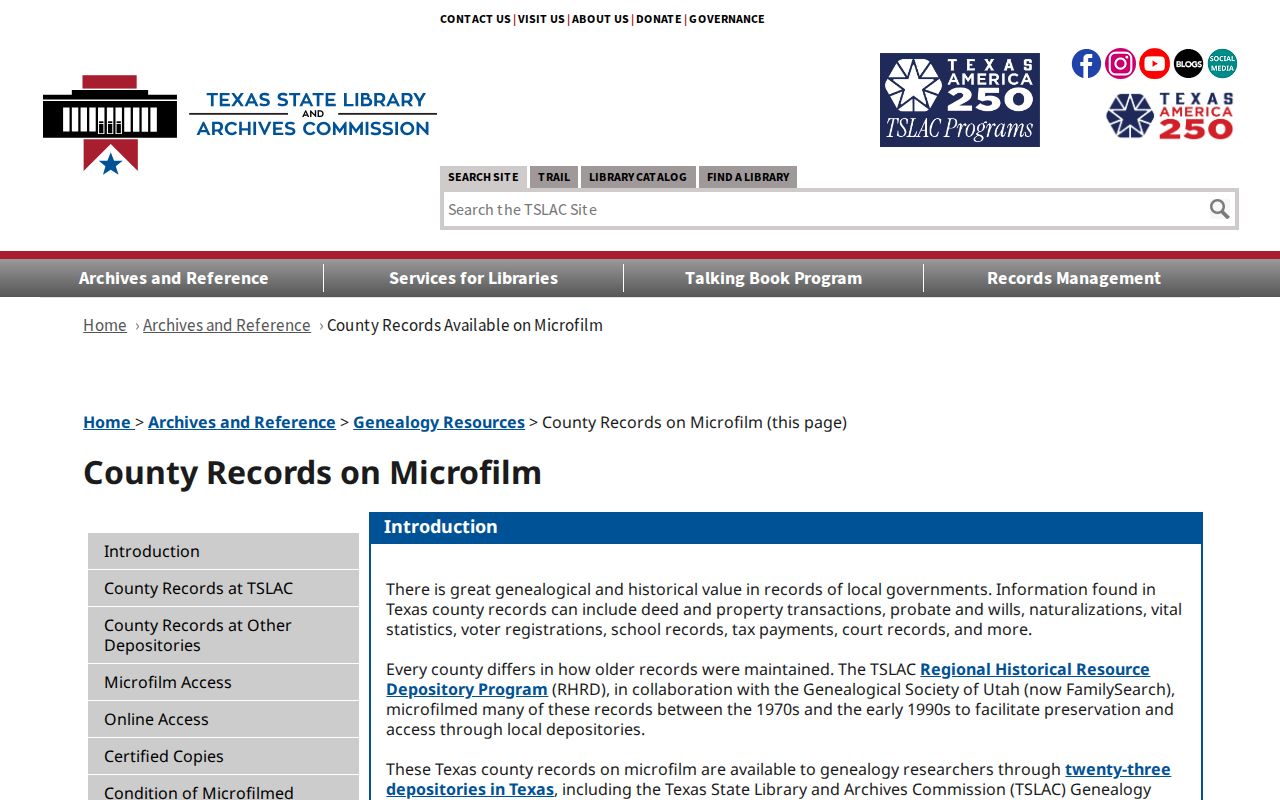
For a missing deed, probate, naturalization, or county-record series, Texas State Library and Archives Commission guidance points researchers back to the original custodian, microfilm, archives, or an affiliate. The place to ask is determined by the record series, not by the fact that an address appears in a directory.
El Paso Directory Archive Requests
Repository provenance turns a useful find into work someone else can retrace. The Historical Society holds photographs, maps, school annuals, scrapbooks, organizational documents, and directory material, while UTEP Special Collections supplies finding aids, digitized archives, directories, maps, and Borderlands collections. A result is stronger when it retains the collection name, creator, item date, page or image number, and any box, folder, or permanent identifier the repository provides.
The El Paso County Historical Society collections page identifies its directory range and related local material.
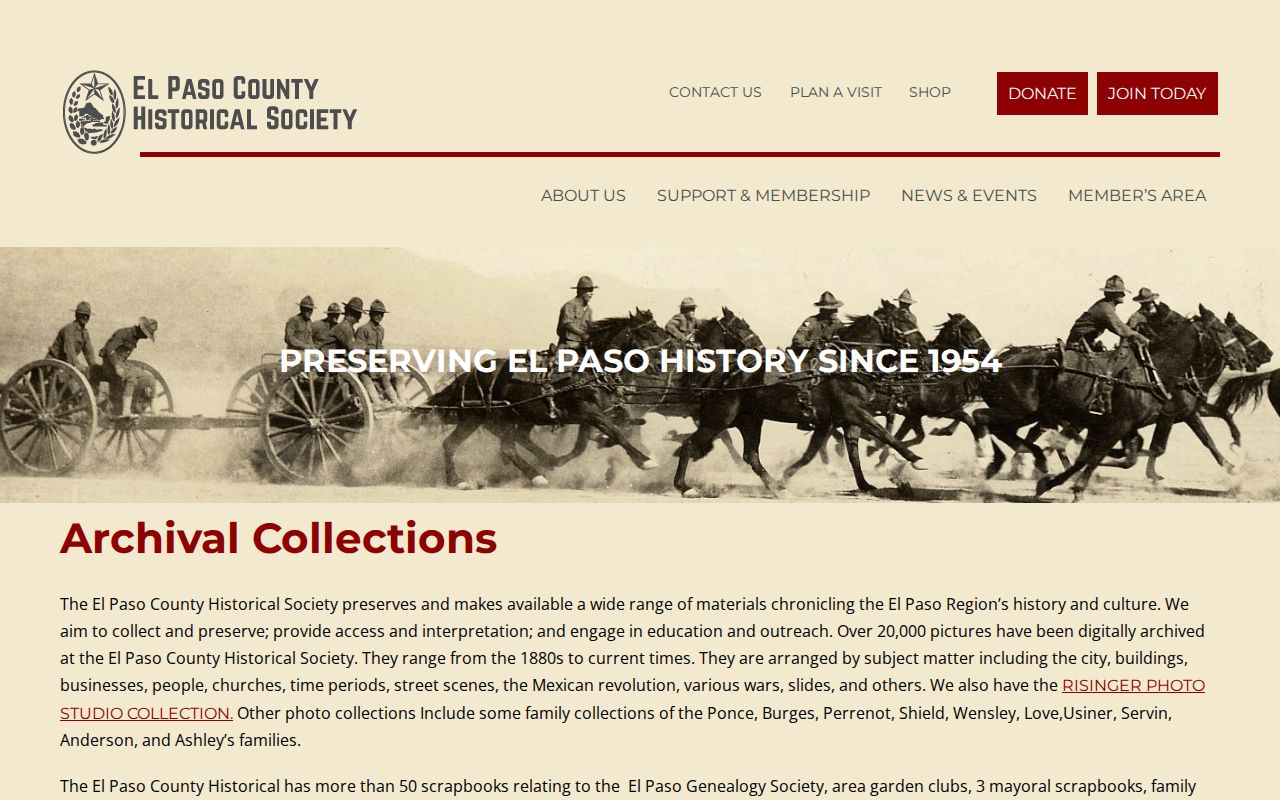
The Society’s directory range is especially useful as a sequence of annual snapshots, but access and exact holdings should be confirmed before a trip or an order.
Border Heritage’s Quartex collection is the digital doorway for part of the local-history material.
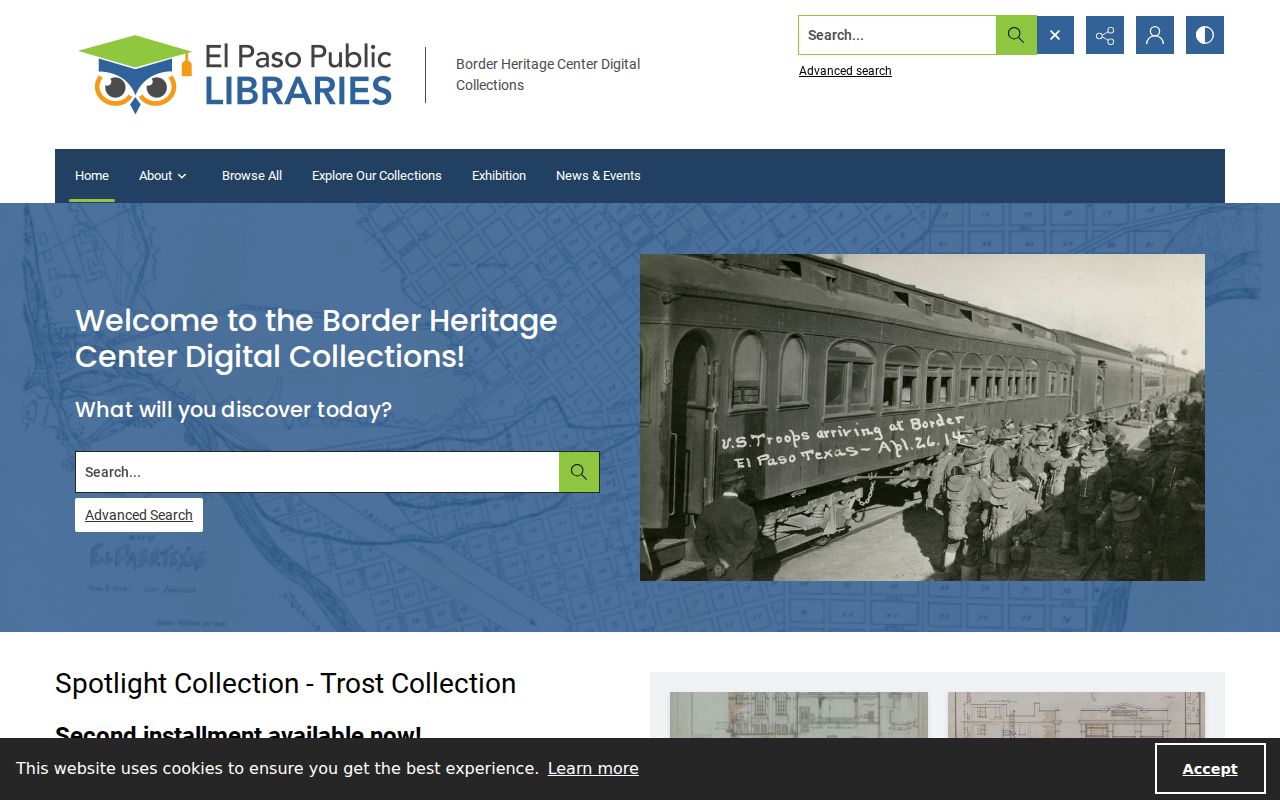
Not every physical image or volume has been digitized. If search results stop online, give the repository the person, variants, years, street or neighborhood, organization, and requested collection so staff can check holdings, microfilm, or finding aids.