
Finding El Paso Residents
Start with one stable fact and let the record type set the next move. An El Paso address is best suited to the appraisal roll and parcel map. A person connected to a recorded transfer belongs in the County Clerk index. A name from an old letter is often better served by a directory, newspaper, or archive. A current owner, an occupant, a voter, and a party to an instrument are different roles. Treating them as interchangeable creates false matches.
Use the source date as part of the result. A current record may not describe an earlier household, and an old directory entry does not establish a current address. The El Paso street directory is the detailed route when an address is the starting point.
- Search a name or address in EPCAD and save the tax year, Prop ID, GeoID, situs, mailing address, and legal description.
- Use the resulting name or legal description in the County Clerk index, keeping the document date and party role.
- Check the relevant court index only when a court, case, or date gives enough context to distinguish a common name.
- Compare an old household against a dated directory street section, newspaper, map, or archival source.
- Ask the correct custodian for an existing record when an online index lacks a needed field, year, or image.
El Paso Resident Record Offices
El Paso County keeps the recorded-property and county-court trails, while the City creates or maintains many municipal address and permit records. EPCAD assesses parcels. The Elections Department administers voter information under Texas rules. Each office holds a different type of evidence and uses a different request route. A City record, County record, appraisal record, and postal address can describe the same place without being interchangeable.
El Paso County Clerk Recording Division
500 E San Antonio, Suite 105
El Paso, TX 79901
915-273-3532
Recorded instruments, historic deed books, and assumed-name filings.
El Paso Central Appraisal District
Property roll and parcel-detail custodian
Current and prior tax-year search
Online search and open-government request routes
Assessed owner, situs, mailing, legal-description, and value fields.
El Paso County Elections
500 E San Antonio Ave, Suite 314
El Paso, TX 79901
915-273-3597
Registration information and lawful voter-file requests.
Note: Use the office that keeps the source, even when several systems mention the same person or street.
El Paso Parcel Details
The EPCAD search accepts a name, address, Property ID, or GeoID in one basic box. Advanced controls add owner name, address, subdivision, condominium, DBA, tax year, type, display, and sort choices. Copy field labels exactly. A location address, sometimes called a situs, identifies the parcel. A mailing address can belong to an agent, office, or owner elsewhere. The current owner field is an appraisal field, not a list of everyone who lives there.
| EPCAD field | Use in an El Paso search | Limit |
|---|---|---|
| Name, address, Property ID, or GeoID | Basic entry points for a parcel result | Use the exact identifier when known. |
| Owner and mailing address | Shows the assessed owner and correspondence location | Neither proves occupancy at the situs. |
| Legal description and Map ID | Connects appraisal data to deeds and GIS | Keep the tax year and access date. |
| Exemptions and values | Supplies appraisal context | Fields can change independently. |
The captured EPCAD property search shows the year selector and the single field used for this first step.
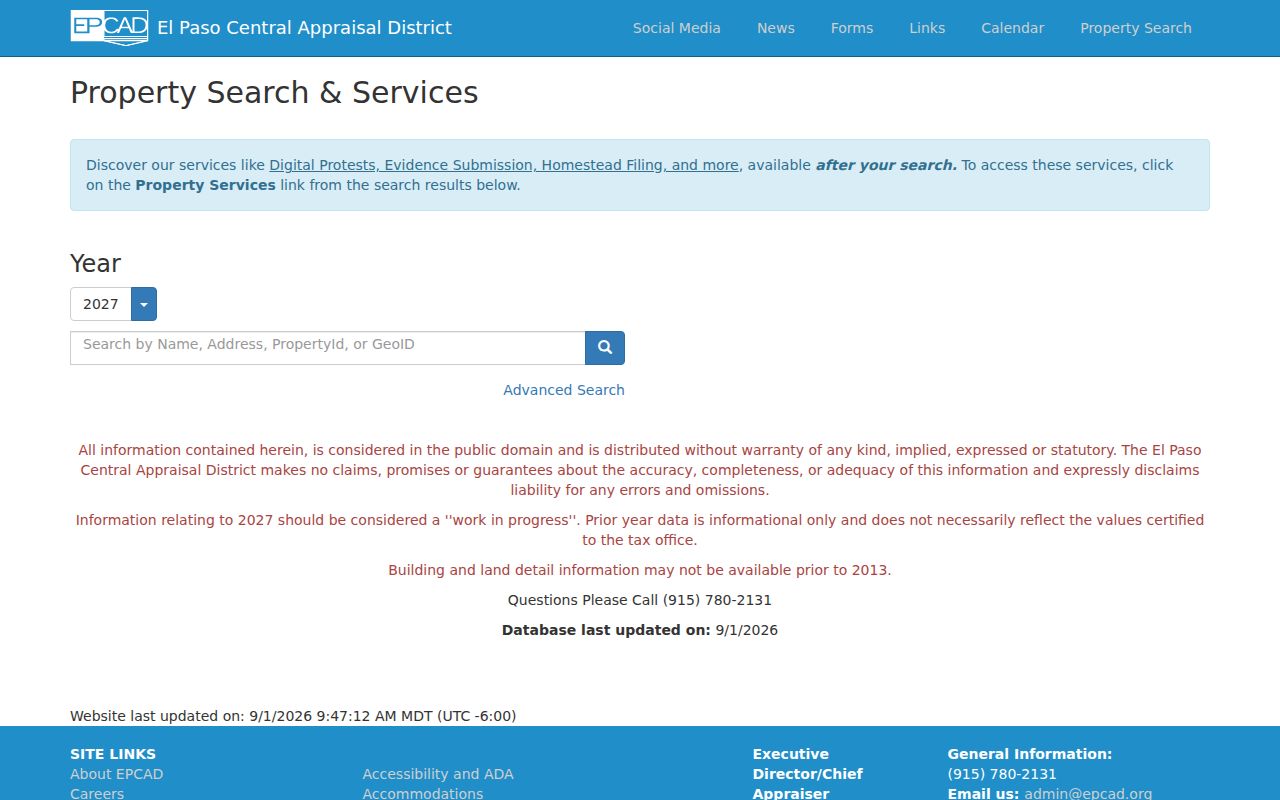
That screen starts a source trail. Save the parcel keys before changing the selected tax year or moving to a different custodian.
El Paso Deed Index Window
El Paso's Historic Deed Index Books give the County Clerk a documented historic path from 1874 through 1963. The remote Kofile interface has type, year, party, last-name, first-name, and book-volume-page controls. Its index is a way to find the next document reference. It does not establish present title, possession, or residence. The portal says its Deed of Trust series is under construction, so a mortgage-history search may need a different Clerk route or later verification.
For later instruments, the County's current Official Public Records interface searches document number, deed name, subdivision, style, book, page, lot, block, unit, tract, and filing-date range. It returns no more than ten documents per search. Split broad names and date ranges, and retain a search log. The County warns that its index is not a professional title or lien search.
Current El Paso Resident Directories
No current El Paso residents directory lists every person in one place. The useful official collections are purpose-built: property assessment, recorded instruments, voter administration, courts, vital-record indexes, and public agency records. Each gives a bounded answer. A voter lookup is not a neighborhood browse tool. A deed index lists document parties rather than an occupancy history. A court index identifies a case, not a person's entire life.
| El Paso source | What it can establish | Access path |
|---|---|---|
| EPCAD parcel card | Assessed owner, address layers, parcel identifiers, legal description | Public web search |
| County Clerk indexes | Recorded parties, dates, document references | Current portal, Kofile, counter, or copy route |
| VoteTexas and County Elections | Registration status or a lawful dated file | Person lookup or written request |
| County and City courts | Case, party, date, status, court context | Separate portal and Clerk channels |
| Border Heritage collections | Dated directory, newspaper, map, and yearbook evidence | Digital, onsite, or staff-assisted access |
Use an El Paso resident lookup when the task is to distinguish one named person across sources rather than follow an address.
El Paso Court Search Doors
Court records split by jurisdiction. County Civil/Family/Probate Odyssey supports a case number, category, status, and date pairs. County Criminal Odyssey adds case, defendant, business, citation, attorney, or bar-number modes, together with name fields, Soundex, date-of-birth range, status, and filing dates. Municipal FullCourt handles City Class C and parking matters. Federal matters use PACER and the Western District rather than the County portal. Statewide re:SearchTX is a separate discovery route with its own access conditions.
A name result needs court, case number, status, and a second corroborating record before it is tied to an El Paso resident. Sealed, juvenile, restricted, and redacted material may be absent. Use Civil/Family/Probate Odyssey or Criminal Odyssey for ordinary County discovery, then ask the relevant Clerk about copies or older files.
El Paso Voter Record Paths
VoteTexas offers three lookup routes: a VUID, the Texas driver-license or ID number supplied during registration, or first and last name. The public lookup's status, precinct, and polling information are not permission to collect or republish protected identifiers or addresses. An El Paso County voter-file request is different. It can involve dated countywide files, formats, field guides, fees, an affidavit, and Election Code restrictions.
For a lawful personal question, use the least sensitive method and keep only the source date and needed verification detail. The official VoteTexas lookup is person-oriented. The County Elections public-information page explains the delivered-file route when a historic snapshot is necessary.
Note: Protected voters and address-confidentiality participants must not be exposed through an El Paso resident search.
El Paso Vital Record Dates
Texas distinguishes a public summary index from a certificate. Birth records become public after 75 years and death records after 25 years, with a one-year rule for an unidentified deceased person's record. A public index has limited fields. A recent certificate still generally requires a qualified requester, identification, and the proper form. Marriage copies come from the issuing County Clerk, while divorce decrees come from the District Clerk.
El Paso County's procedures include mail, counter, and VitalChek routes for local vital records. The local mail material lists identification and a notarized sworn statement for birth or death requests. Fees may change, and the marriage page and fee PDF differ on the informal-license amount, so live custodian guidance controls payment. Texas DSHS request procedures explain the statewide index, certificate, and research-data paths.
Historical El Paso Resident Directories
For an older El Paso household, combine a printed city directory, its street section, a deed or parcel record, and a newspaper or obituary. The El Paso County Historical Society reports city-directory holdings from 1886 through 2011, although the inspected material does not prove every year is present. Border Heritage adds city directories, newspapers on microfilm, maps, yearbooks, cemetery references, and genealogy materials. These sources are dated snapshots, not continuous address logs.
The 1889 Directory of City of El Paso is a digitized 167-page object. Worley's 1912 volume has 576 pages and contains alphabetical, classified, and street-guide material. Preserve a title, year, printed page, section, spelling, and source link for each finding. The city directory page contains the collection-level detail.
El Paso Archive Sources
Border Heritage Library at the Main Library combines Southwest, genealogy, and Raza collections. Staff can help locate a directory volume, microfilm reel, cemetery source, vertical file, or newspaper date, and assistance is available in person and remotely. The El Paso County Historical Society and UTEP Special Collections provide complementary maps, annuals, photographs, finding aids, and digitized archives. Physical holdings and digital objects do not always overlap.
The Border Heritage collection is the useful first contact for a local-history request with a full name, alternate spellings, approximate year, street or neighborhood, and record type. Ask for the original page image or finding aid where possible. OCR is convenient, but an image, page number, collection name, and repository give an El Paso residents directory finding needed context.
El Paso State Record Systems
Some resident clues are held outside El Paso. A state-custody search, a Texas business filing, and a County property result each cover different events. A Texas Department of Criminal Justice result is about state custody, not a complete County criminal history. A Secretary of State filing can show an entity or UCC role, but does not prove a person lives at a listed address. The source's stated role should stay in every research note.
The captured TDCJ offender-search screen shows name, SID, TDCJ number, wildcard, detail, and subscription controls.
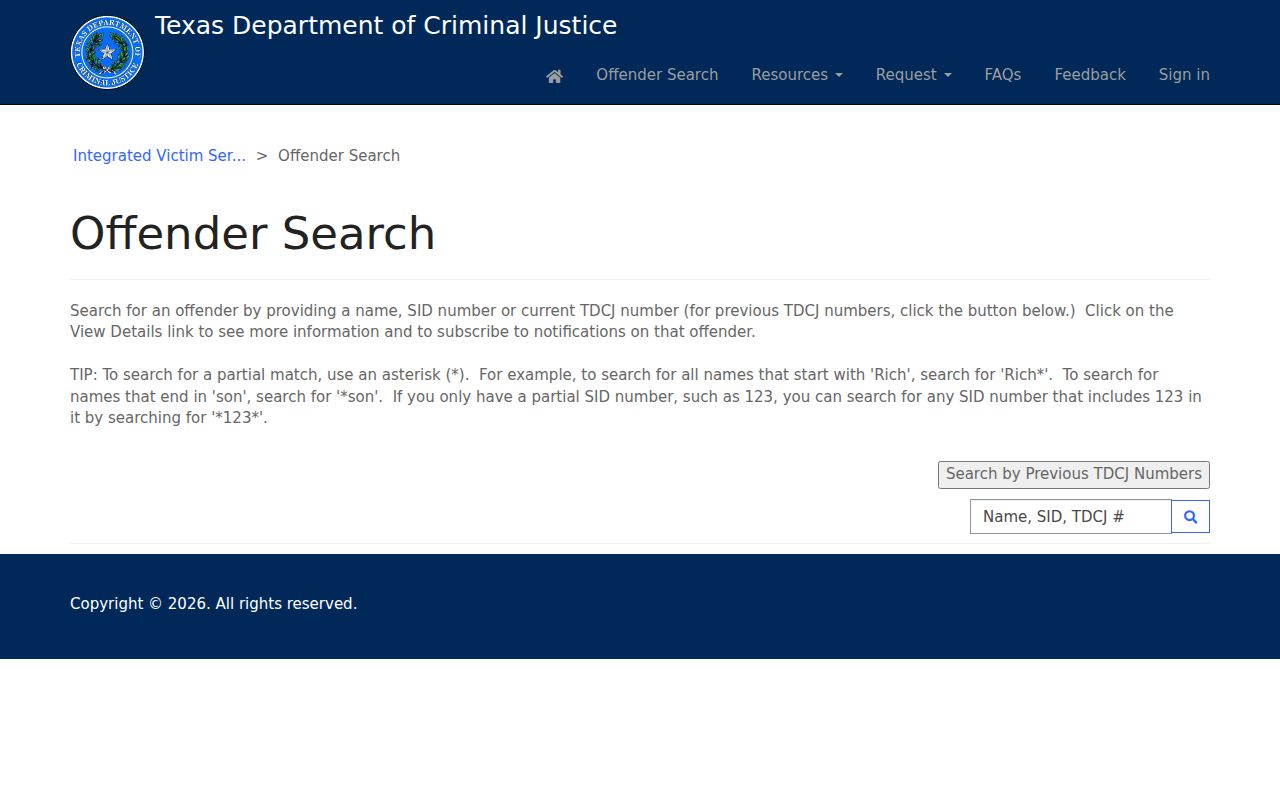
Use a result only within that system's stated scope, and do not turn a partial name match into an identity conclusion.
The Texas Secretary of State search menu separates SOSDirect, UCC, and specialized business-record routes.
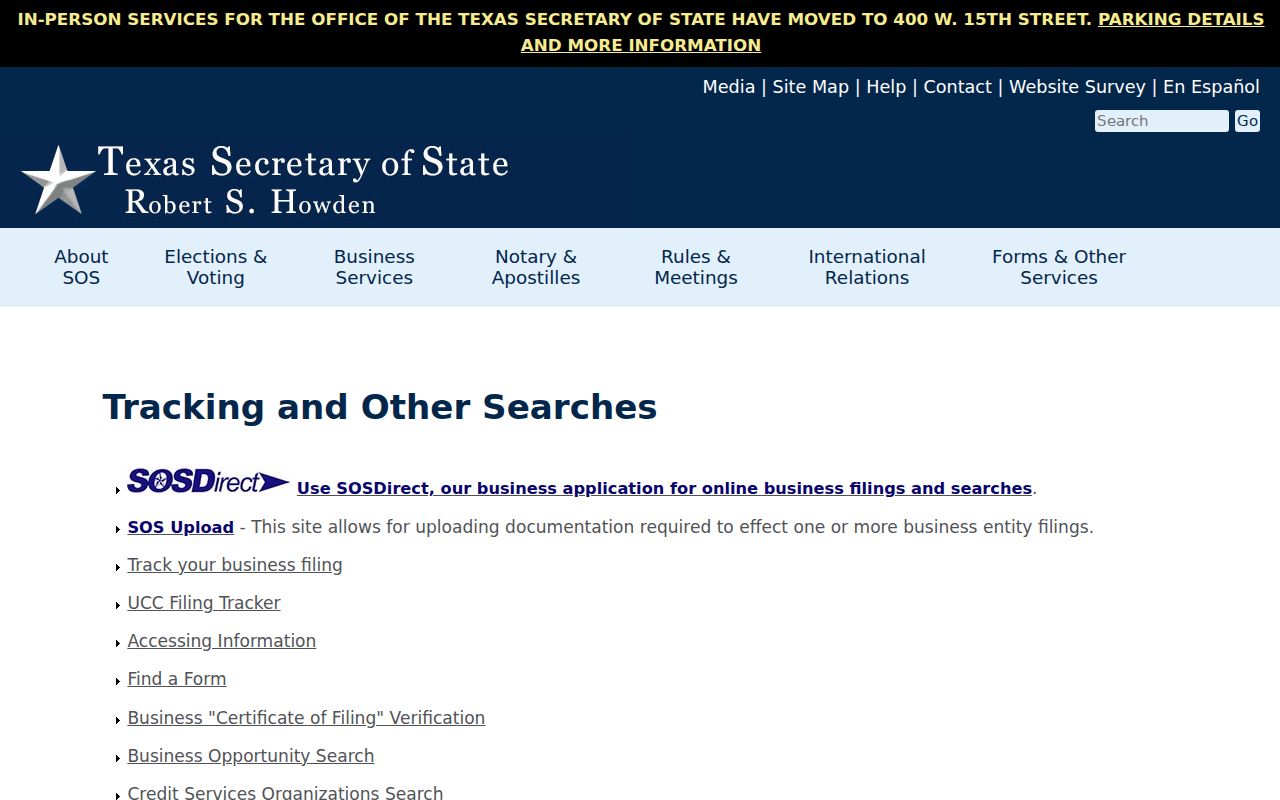
Those filing paths can corroborate a dated affiliation, while redactions and account or fee rules remain in force.
El Paso Records Request Route
When an index lacks a document, date range, export, or field, request the existing record from the custodian. Texas Public Information Act requests should be written and specific. Name the office, record type, address or account number, date range, and desired electronic format. A public body need not create a new analysis, make an inference, or perform a new database join. If it cannot produce material within ten working days, it should communicate a reasonable production date; estimates over $100 can require a deposit or prepayment.
The City portal is a submit, track, archive, and support route for municipal records. The County Clerk has division-specific PIA forms, and EPCAD has an open-government process for its own data. The captured City public-records portal shows the municipal request pathway.

Use the City route for City-held material and the County route for County-held material, even when both records mention the same address.
El Paso Property Record Alerts
The County Clerk's Property Fraud Alert is a free notice service. The Clerk reports that it launched in June 2024, and the research documented a 2025 District Attorney deed-fraud release that urged owners to check County Clerk records. An alert is not title insurance and does not decide whether an instrument is valid. It is a prompt to examine the actual document, document number, recording date, and official custodian path.
The El Paso County Records Search hub collects local routes for deeds, courts, vital material, jail records, foreclosures, and related County indexes.
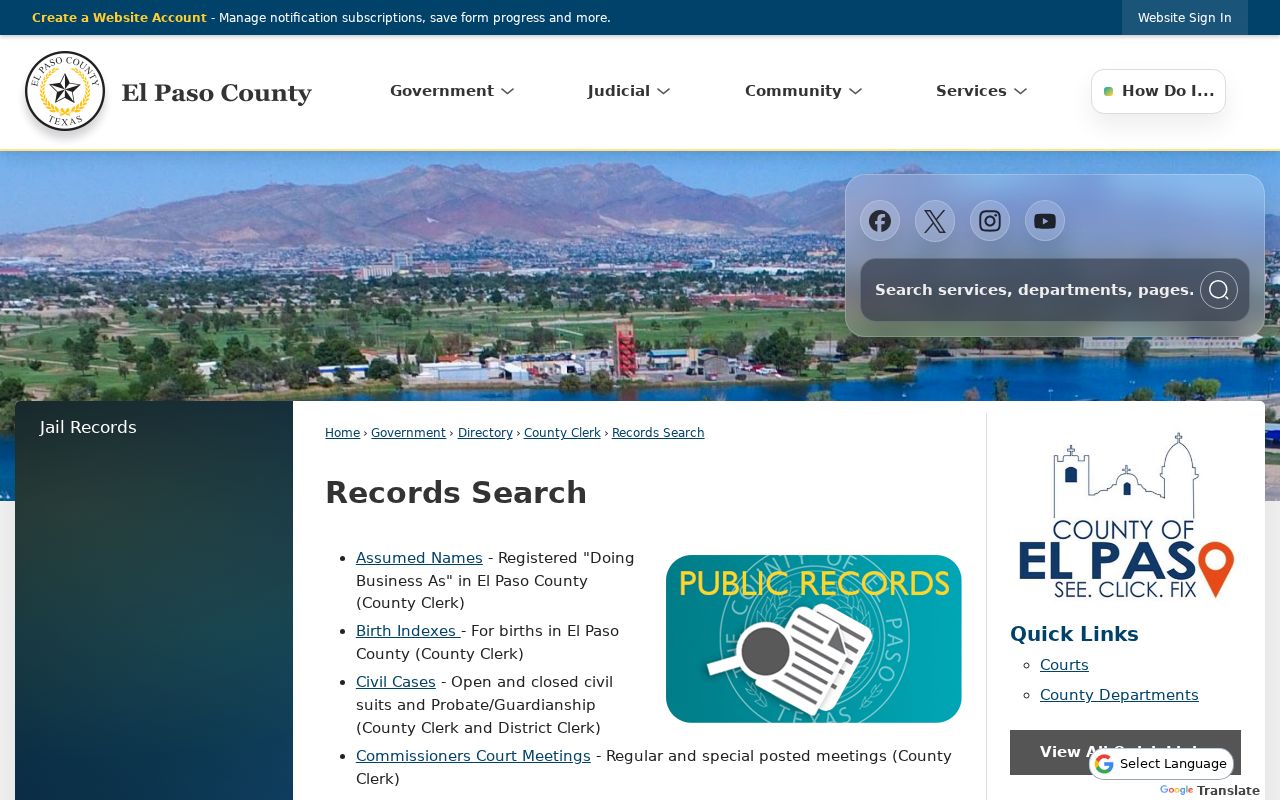
Keep a neutral search log and contact the Clerk or a qualified title or legal professional for a suspected unauthorized filing.
El Paso Address Geography
Postal, parcel, and municipal geography are separate. The City GIS Deeds service includes a situs ZIP field, while EPCAD Advanced Search did not expose a dedicated ZIP control. A ZIP can cross City limits or point to Fort Bliss, Horizon City, Socorro, Anthony, Vinton, Clint, or San Elizario in County context. A neighborhood-association boundary also differs from an appraisal neighborhood, precinct, or legal subdivision.
For a present address, use the parcel's legal description and ID to move among systems, then verify delivery with USPS. For an older address, preserve the historic spelling and seek a dated map or address-authority record. No official El Paso street-renumbering or complete street-name-change table was located, so an old number should not be silently converted to a modern one.
El Paso Resident Evidence Grades
Not every search result deserves the same confidence. A direct official image with a stable identifier, date, and visible fields is the strongest grade. An official index with limited document access is useful but narrower. A library catalog or finding aid confirms that a collection exists, while an OCR-only hit needs the original page checked. When no reliable value is found, record the gap and identify the next custodian instead of turning an absence into a conclusion.
For a modern name-and-address claim, seek one current official source and two independent corroborators when practical. A parcel card, dated directory page, and recorded instrument can agree without claiming more than each source proves. This source-first habit makes an El Paso residents directory trail easier to reproduce when portals, labels, and data change.